Vacation clubs are another timesharing variation. A getaway club is a company that owns several timeshare properties in different places. If you are a club member, you can book space at the numerous resorts that become part of the club in accordance with club guidelines. You pay annual charges, and there is a preliminary expense to sign up with the vacation club. As with a right-to-use home, the holiday club contract will either contain the timeshare program files or will integrate them by reference. Club subscriptions can typically be purchased, offered, or passed to heirs. There can be various levels of subscription, with some subscription levels receiving greater top priority in scheduling specific systems or having access to bigger units.
Some holiday clubs run through a Board of Directors chosen by the membership. On the other hand, other trip clubs are simply companies that pre-sell vacations, and membership in such clubs does not consist of any right in the governing of the club - what does float week mean in timeshare. Ownership of properties included in a club is usually structured in one of 2 ways: The designer (or its successors) owns the homes, with the club having access to the residential or commercial properties through a legal relationship with the owner. The designer transfers ownership of the residential or check here commercial properties to the club after they are built. In this case, the homes would be owned by the club jointly and not by members individually.
In either case, if the club stops operations, you can easily lose your right to use the residential or commercial properties without compensation. how much does a blue green timeshare cost. In some clubs, the residential or commercial properties are put into a trust that owns the homes on behalf of the club members (what is green season in poconos timeshare). This plan supplies some added security to the club members if the club ceases operations. Some holiday clubs offer "deeded" memberships. If you own or are considering acquiring a "deeded" holiday club membership, you should read your files to verify what your deed represents. With some "deeded" vacation clubs, each membership consists of a deed for ownership of a specific unit and week at a resort.
In other cases, the "deed" might represent a fractional ownership of the getaway club. In yet other clubs, the "deed" is only a certificate for subscription in the getaway club, without representing ownership of any real property. Trip clubs and right-to-use resort homes have numerous typical functions, and many of the cautions formerly described for right-to-use tasks also use to trip clubs. Overselling the program has actually been a problem with some holiday clubs, just as it has been with some undeeded resorts. In a common points program, you join the program by purchasing a membership. You then get a specified number of points every year, with the number of points you get established by the regards to the subscription you purchase.
You also should pay an annual charge for upkeep and maintenance; the quantity of the charge will typically depend upon the number of points you own. As with trip clubs, the majority of points programs provide numerous resorts in which you can book weeks. The number of points required to obtain accommodations will normally vary with the lodgings chosen. Elements influencing the number of points needed for your requested accommodations consist of: The popularity of the resort The size of the lodgings The variety of nights of occupancy The specific nights requested (weekend and vacation nights normally require more points per night than do mid-week nights) The season of the year.
A lot of points programs will allow you to accumulate points over 2 or more years, so that you can trade to a larger unit or more popular resort if you are willing to travel less often. Some points programs will likewise permit you to inhabit a resort for less than a complete week at a lowered number of needed points. Just recently, some points programs have actually begun permitting members to redeem their points for other travel associated services, such as airline tickets and auto rentals. I anticipate that other points programs will add comparable features in the future. I likewise expect that regular traveler programs run by travel companies such as airlines and hotel chains will establish tie-ins with timeshare points programs to more extend point generation and redemption opportunities. how does the club lakeridge timeshare keep their maintenance fees low?.
Our How Does Diamond Resorts Misrepresent Their Timeshare PDFs
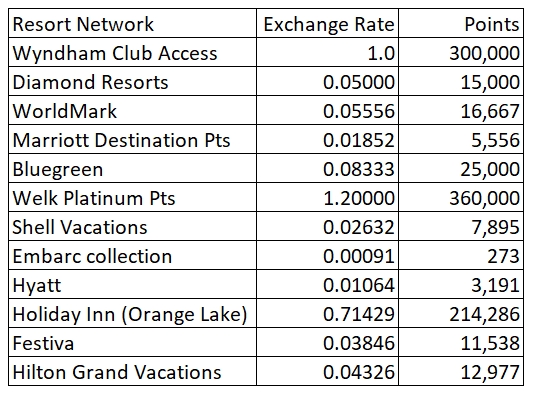
If the program is connected to a specific week, the variety of associated points will depend upon the desirability of the underlying week (size of unit, season, resort popularity, and supply/demand balance). Points programs can be run by a program operator, or can be part of https://60eff0b1a42e3.site123.me/#section-61e287bc1fee0 a trip club timesharing program. Just recently, some exchange business (see Lesson 3 for a conversation of exchange business) have actually started establishing points programs. An important concern with points programs is the long-term "worth" of your points in scheduling accommodations. If the program operator is able to increase the number of points required to reserve systems at taking part resorts or to obtain other services, the value of your points will erode, and you may be forced to buy more points to be able to continue to reserve the systems you prefer.
Points programs and right-to-use resort homes have numerous common features, and the majority of the warns formerly explained for right-to-use tasks likewise use to points programs. One of the most attractive features of timesharing is the capability to exchange your timeshare week for another person's week. Through such exchanges, you can obtain timeshare lodgings in preferable getaway areas throughout the world. Exchanging also permits you to getaway at various times of the year, even utilizing a fixed week. The easiest exchange technique is to discover a timeshare owner who is interested in exchanging his/her week for your week. Each of you then informs your particular resort that the other owner will be using the week at that resort.
In these arrangements, you can exchange your week for a week at another resort within the group. Many timeshare management companies that run resorts in different locations use this type of exchange service as part of their management services. In some vacation clubs, this is the only method that you can have a week appointed to you. The most common exchange approach is through a timeshare exchange business. To do this, you "deposit" your week with the exchange company. As other owners deposit their weeks (and as resorts deposit unsold weeks with the exchange business), the You can find out more exchange company constructs up an inventory of weeks that are readily available for exchanges.
The exchange company hence works as a clearinghouse for people making exchanges. Note that the owner of the week you exchange for will almost never ever be the individual who receives the week you deposit (how does the club lakeridge timeshare keep their maintenance fees low?). The need for many resorts differs seasonally. For example, for people living in the northern hemisphere, beach locations are popular in the summertime, whereas ski resorts are most popular throughout ski seasons. Appropriately, a timeshare week during a high need season will have more worth than would a week for the very same lodgings throughout an off-season. This value impacts both the price of the system and the quality and types of exchanges you can make with the timeshare system.